Teamsters Local 777
I Heard You Paint HousesTeamsters Local 777 was a Chicago taxicab local whose attempted breakaway became a test of power between the Teamsters and its labor rivals in the summer of 1961. The dispute was not principally with employers: it was a fight over whether a dissident group could take its local out of the Teamsters, and whether the people who controlled the existing union network would let it go without punishment. In Frank Sheeran’s account, the rebels ultimately won the election despite a campaign of intimidation and sabotage intended to make their departure a warning to others.
The Local and Its Place in Chicago
Teamsters Local 777 was one of a group of Chicago cab locals associated with Joey Glimco. Before the convention, Jimmy Hoffa sent Sheeran to Chicago to work directly under Glimco; Hoffa sent him back there again immediately afterward. Sheeran’s assignment placed him inside a local dispute that Glimco treated as consequential well beyond the taxicab unit itself.
Glimco had fifteen cab locals outright, as well as Teamsters locals in other trades and influence behind the scenes in other unions. In Sheeran’s description, allowing Local 777’s rebels to leave without resistance risked setting an example for the rest of that network. Glimco might lose the local in the end, but he believed its departure had to be painful enough to discourage others from following. The local’s conflict therefore carried stakes for the reach and authority of the wider organization.
The Breakaway Campaign
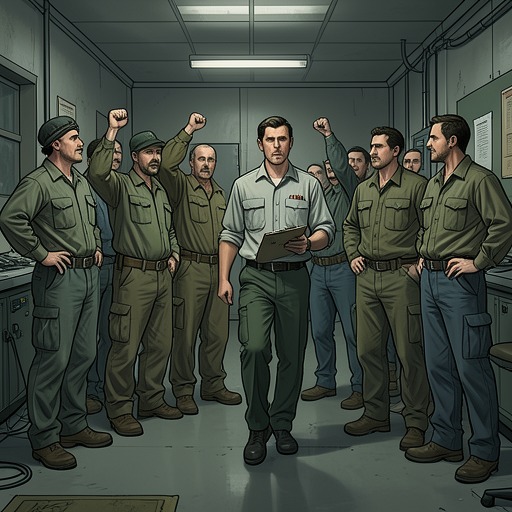
A group of dissidents wanted to take the cab local away from Glimco and make it independent. Paul Hall’s Seafarers union, affiliated with the AFL-CIO, supported the rebels and was expected to take over the local if it became independent. Dominic Abata led the dissident group. The rebels gathered enough signed cards to bring the question to an election, turning dissatisfaction with the existing local arrangement into a formal contest over representation.
Sheeran acknowledged that the rebels had their reasons for wanting to leave, though his account does not describe those reasons in detail. He instead emphasizes the organizational competition surrounding the campaign: Hoffa wanted to defeat Hall in Chicago, and the conflict was treated as a struggle between unions rather than a dispute between workers and management. That distinction matters to the account. Local 777’s election was both a vote by cab drivers and a contest over which union would command their allegiance.
Intimidation and Cab Sabotage
Before Abata received round-the-clock police protection, Glimco’s scouts reported that he was at a particular location with several men. Glimco ordered Sheeran, “Go out there and give them a little message.” Sheeran understood the assignment as a show of force without a weapon. He went with two men from Philadelphia whom Hoffa had sent to Chicago. They walked past a chain-link fence toward a cinder-block building, where about fifty men suddenly came out. Sheeran’s two companions ran; he stayed and confronted the crowd, warning that they would have to kill him if they attacked, because otherwise he would return and kill them. Abata met his gaze and answered, “We know who you are.”
The confrontation did not settle the contest. In a later complaint to Glimco, Sheeran said that the scouts had failed to warn him about the size of the crowd; he compared the bad information to being told to expect a German squad and meeting a full regiment. The episode shows the gap between the language of a controlled “message” and the volatile reality of the operation. It also precedes the account’s more sustained description of pressure on the rebels’ ability to work.
That summer, cabs carrying the rebels’ or Seafarers’ signs were taken when drivers left them unattended. The cars were hot-wired, or driven away with keys left inside, and taken to Lake Michigan. The perpetrators let them coast into the water and sink, disabling the vehicles and cutting into the rebel cab drivers’ revenue. Sheeran describes a backup car carrying the participants away past a police car; someone handed the officer a paper bag containing money, concealed from view, and explained that the cab had run out of gas or lost its brakes. The officer laughed, and they drove on. In the narrative, the sabotage was a way to impose financial costs on the rebels while disguising the deliberate destruction as an accident.
Election and Significance
The rebels won the Local 777 election in Chicago in the summer of 1961. The victory made good on their effort to separate the local from Glimco’s control, despite the pressure brought against them. Shortly afterward, at an AFL-CIO convention, Hall called Hoffa a “fink” and gave Abata’s rebels a Seafarers charter, formally bringing them into the AFL-CIO. The episode widened the local dispute into open conflict between the labor organizations. Sheeran’s account presents the Chicago struggle as an exchange of tactics: Hall’s move was followed by a declaration of warfare, and the Teamsters-AFL-CIO contest was described as fighting fire with fire.
Local 777’s story shows how a union election could become a struggle over territory, institutional example, and control of workers’ representation. The rebels had secured enough cards to force a vote; Glimco’s side sought to make leaving costly; and the election nevertheless went against the existing leadership. The local’s significance in the book lies in this collision between formal choice and coercive power: the cab drivers’ vote determined the outcome, but the effort to influence that choice unfolded through threats, damaged livelihoods, and a wider contest between unions.